Nairobi National Park
Nairobi National Park Overview
Nairobi National Park is not a zoo. It is not a conservation centre. It is a fully wild, unfenced national park where dangerous animals roam freely, located 7 kilometres from the centre of a city of five million people. Lions genuinely eat giraffes here. Rhinos genuinely charge vehicles that come too close. Black-backed jackals pick through carcasses in front of a backdrop that includes the Kenyatta International Conference Centre. It is surreal, magnificent, and completely real. And it is available on a layover.
Nairobi National Park Location
Nairobi national park is located 10 kilometers from Nairobi city center along Langata road. The park is close to Bomas of Kenya.
Weather and climate in Nairobi National Park
Nairobi has a cool and temperate climate. Temperatures are reasonably constant year-round, and it cools off considerably at night. There is very little rain in the Dry season between June and October. November to May, the Wet season, has two periods of rain. The ‘short rains’ are heaviest in November, and the long rains are at their peak in April.
Nairobi National Park Wildlife
Nairobi National Park boasts a remarkable roster of wildlife for its size. It lacks only the African elephant — too large to be sustainably accommodated in 117 km² — and the chimpanzee, which is not native to Kenya. Every other large mammal of the Kenyan savannah is represented.
Black Rhinoceros: The park has one of Kenya's most important black rhino populations — 50+ individuals. Often seen in the open grassland areas in the early morning. Most accessible rhino viewing in Kenya.
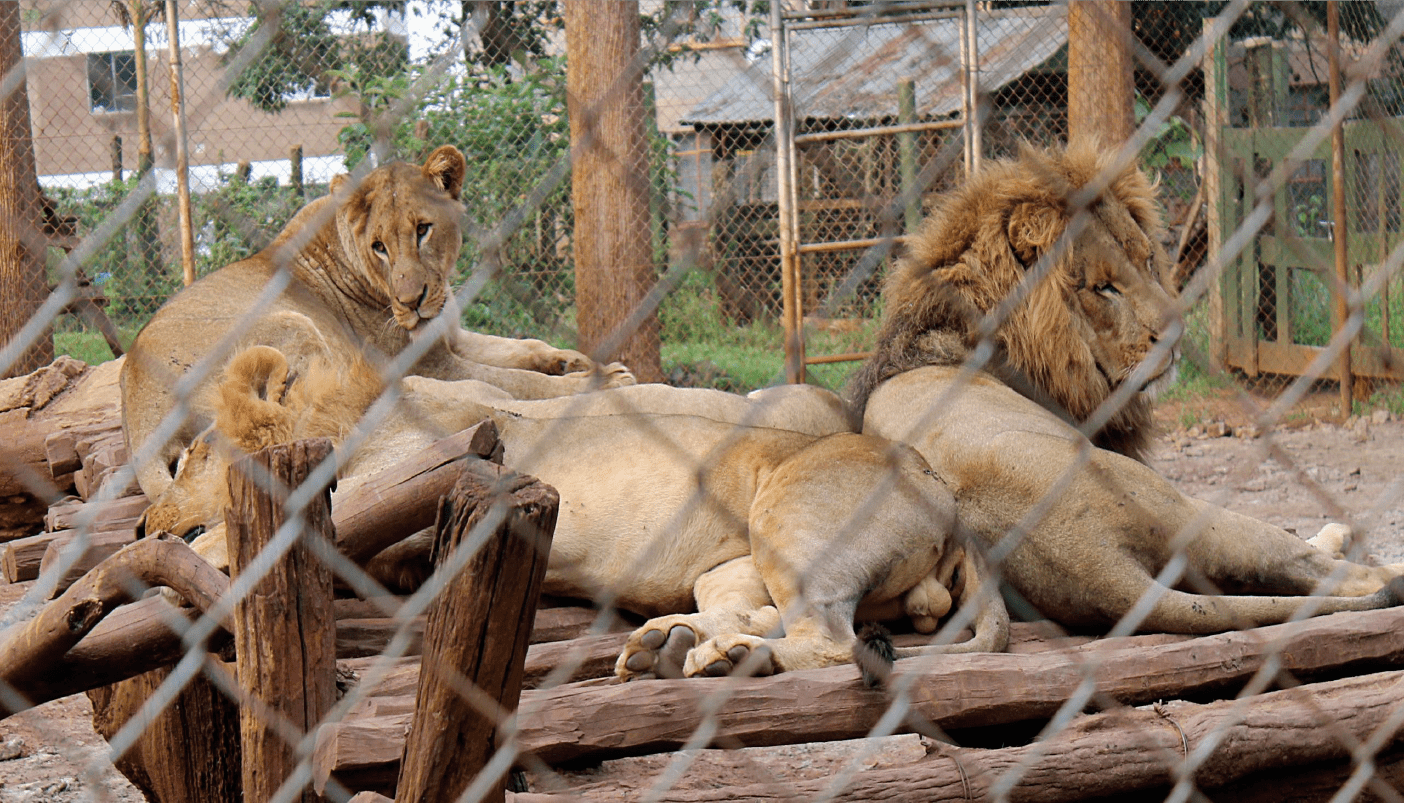
Lion: Multiple prides in the park. Nairobi NP lions occasionally walk through the unfenced southern boundary into Kitengela community land at night. 100+ individuals estimated park-wide.
Leopard: Dense riverine forest along the park's stream system shelters a leopard population. Very rarely seen — but regularly confirmed on camera traps.
Cheetah: Open grassland on the southern plateau provides ideal cheetah habitat. One of Nairobi NP's most consistently exciting predator sightings. Mothers with cubs seen regularly.
Giraffe(Rothschild's): The Rothschild's giraffe — one of Africa's most endangered subspecies — is present and frequently seen against the city skyline backdrop. Iconic Nairobi image.
Hippopotamus: Present in the Athi and Mbagathi rivers, which flow through the park. Best seen in the morning before they submerge for the day.
Buffalo: Large herds graze the park's open grasslands. Move between the park and Kitengela along the unfenced southern corridor.
Ostrich: Masai ostrich — the larger, red-legged subspecies — are common in the open grassland areas. Males in full breeding display are extraordinary.
Birds: Exceptional for a 117 km² area. Secretary bird, African hawk eagle, martial eagle, and crowned crane are regularly seen.
For the best photographs, position yourself in the open grassland of the central plateau with a clear sightline north-east in the morning light. The Nairobi CBD towers are clearest in the morning before haze builds. A giraffe or rhino in the foreground with the Kenyatta Centre visible behind is one of the world's most remarkable wildlife images — available every morning, 7 km from a Nairobi hotel.
Best time to visit Nairobi National Park
Unlike Kenya's other parks, Nairobi National Park does not have a pronounced seasonal wildlife rhythm — animals cannot migrate out of the park's northern boundary (the Nairobi–Mombasa highway), so they are resident year-round. The park is genuinely good in all 12 months. However, specific timing within a visit makes a significant difference.
- Best time of day: 06:00–09:30 for predator activity and the clearest city skyline backdrop. 16:00–18:30 for golden light photography and very active lion and cheetah.
- Avoid midday: 10:30–15:00 is the least productive period — heat forces most animals into shade, and they become inactive. Guides use this time for the dam and forest edge, where shade species remain visible.
- Migration season bonus (June–November): The park's southern boundary is unfenced, allowing wildebeest and zebra to migrate seasonally between the park and the Athi–Kapiti ecosystem. During this period, very large herds enter the park, dramatically increasing the wildlife spectacle and predator opportunity.
- Dry season (July–October and January–March): Shorter grass improves visibility across the open grassland plateau. Rhinos are most active in the early morning during this period.
- Layover safaris: Nairobi NP is the only park in the world that works as a genuine airport layover activity. A 5-hour layover allows a 3.5-hour game drive and return to JKIA. Contact Denki Travels with your flight times — we have done this dozens of times successfully.
Attractions in Nairobi National Park
Game Drives: The primary activity. Half-day game drives (3.5 hours) cover the main circuits, including the open grassland plateau, the dam, and the forest edge. Full-day drives extend to the southern boundary and the river system. All Denki Travels Nairobi game drives use pop-up roof Land Cruisers with an expert guide who knows the specific resident prides and where the rhinos were seen last.
David Sheldrick Wildlife Trust: Adjacent to the main gate. The world's most successful elephant orphan rehabilitation programme. Baby elephants — ranging from weeks to months old — are brought out at 11 am for a 1-hour public visit where they mud-bathe, interact with their keepers, and drink formula milk from giant bottles. Deeply moving experience. Booking is essential — the daily visit sells out weeks in advance in peak season.
Giraffe Centre: The African Fund for Endangered Wildlife's breeding centre for the Rothschild's giraffe — one of Africa's rarest subspecies, fewer than 800 remaining in the wild. Feed full-grown Rothschild's giraffes by hand from an elevated wooden platform at eye height. They eat directly from your mouth if you hold the pellet between your lips. An extraordinary close encounter. 10 minutes from the park gate.
Kenya Wildlifeife Service Education Centre: Inside the park. Exhibits on Kenya's wildlife, conservation history, and the specific ecology of Nairobi National Park. Well-produced and informative for children and adults. Free with park entry. Good orientation stop before or after a game drive.
Nairobi safari walk: A 2.5 km boardwalk circuit adjacent to the animal orphanage — rescued animals that cannot be returned to the wild are housed in open enclosures along the path. Lions, leopard, cheetah, serval, and buffalo at very close range. Less dramatic than a wild game drive but excellent for guaranteed sightings of species that may be elusive in the park. Very good for young children.
Animal Orphanage at KWS HQs: Operated by Kenya Wildlife Service inside the park grounds. Injured, orphaned, and confiscated wild animals are cared for here. Not a zoo — animals move through on their way to rehabilitation. Lions, leopards, jackals, mongooses, and raptors are typically resident. Combined with the Safari Walk for a comprehensive half-day excursion.
Nairobi National Park Safari
We have daily game drives at the Nairobi national park that you can join. Here are our best packages that can suit your schedule. Should you need your custom-made tour, feel free to inquire and we shall tailor one as per your schedule and budget.