Amboseli National Park
Amboseli National Park Overview
There is a moment that happens in Amboseli that no photographer has ever fully captured, no documentary has ever quite done justice to, and no amount of reading will prepare you for. It happens at first light, when the air is still cold and the sky is shifting from charcoal to copper. You are parked on a rise of open ground, engine off, completely silent — and then, out of the pale morning mist, a procession of elephants emerges. Not one or two. Dozens. Moving in a single file across the swamp, their reflections breaking apart on the water’s surface. And behind them, rising so high and so suddenly that it seems painted onto the sky rather than actually standing on the earth, is Mount Kilimanjaro — all 5,895 metres of it, snow-white and absolute, glowing in the first light of an African dawn.
That image is of Amboseli National Park. And it is real. Every single morning.
Located 240 kilometres south of Nairobi in Kenya’s Kajiado County, Amboseli National Park is one of Africa’s most iconic safari destinations — and for reasons that go far beyond its extraordinary scenery. This 392-square-kilometre reserve sits at the foot of Africa’s highest mountain, fed by underground springs that originate from Kilimanjaro’s ancient glaciers and rise through lava rock to create permanent swamps that sustain wildlife year-round, even when the surrounding plains bake to dust. It is this underground water — invisible, silent, and inexhaustible — that makes Amboseli not just beautiful, but biologically extraordinary.
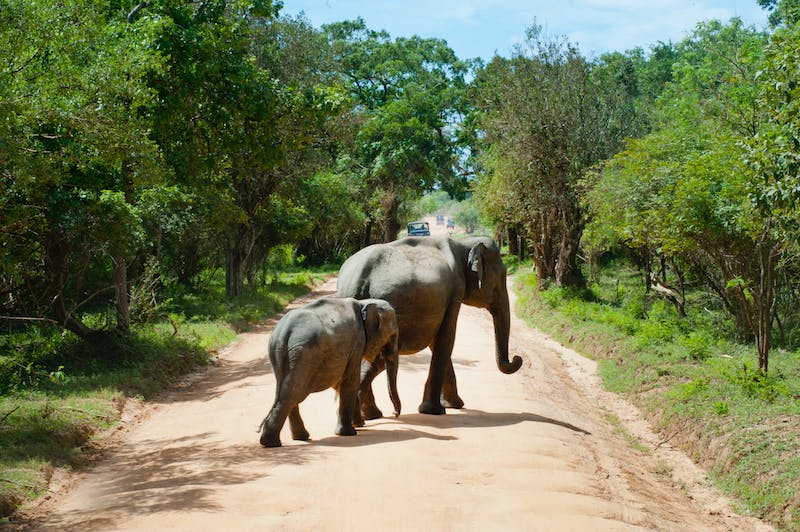
Amboseli is home to Africa’s most studied elephant population. Since 1972, the Amboseli Elephant Research Project — the longest continuous study of wild elephants ever conducted — has documented over 1,500 individual elephants across 58 known family groups. When a Denki Travels guide points to an elephant and tells you her name, her family history, and the names of her calves, that knowledge is built on more than 50 years of unbroken field research conducted in this park. You are not simply watching elephants. You are watching individuals whose life stories are known and documented in a way that exists nowhere else on Earth.
Beyond the elephants, Amboseli delivers the full Kenyan wildlife experience. Lions hunt on open plains where there is nowhere to hide and every stalk is visible from a kilometre away. Cheetahs sprint across the dry lake bed in full daylight. Masai giraffe browse the scattered acacia trees at the swamp edge while pelicans and fish eagles work the water behind them. Over 620 bird species have been recorded in the park — making it one of Kenya’s finest birding destinations alongside its status as a world-class wildlife reserve.
For Indian families, honeymoon couples, wildlife photographers, first-time safari visitors, and seasoned travellers who have been everywhere else — Amboseli consistently delivers experiences that are simply not available anywhere else in Africa. The combination of intimate elephant encounters, the Kilimanjaro backdrop, and a 4-hour drive from Nairobi makes it arguably the most rewarding national park on the continent for the amount of time and distance it requires to reach.
This is Amboseli. And if you visit once, you will spend years trying to find the right words to describe it to the people who have not been yet.
Amboseli National Park Location
Amboseli lies at the foot of Mount Kilimanjaro — the mountain is actually in Tanzania, but Amboseli provides the most dramatic viewing angle of its glacial summit. The park is fed by underground springs originating from Kilimanjaro's glaciers. These springs create permanent swamps — Enkongo Narok and Longinye — that support year-round elephant populations even during severe droughts when surrounding areas dry completely. The swamps are also the primary reason Amboseli's landscape differs so dramatically from the Masai Mara — here, lush green wetlands contrast with dust-white plains and a perpetually snow-capped horizon.
Weather and climate in Amboseli National Park
The Amboseli national park has two seasons. Dry season and wet season.
The Dry season starts in June and goes up to September with high temperatures of up to 26°.
The wet season is characterized by short rains followed by long rains. The long rains normally make roads impassable hence not advisable to visit the park during those times.
Between the months of October to December, it rains over the day and the temperatures are around 28°.
Between the Months of January and May, rains are consistent with April being the wettest Month.
Amboseli National Park Wildlife
Amboseli is defined by its elephants above everything else. The Amboseli Elephant Research Project has tracked over 1,500 individual elephants across 58 family groups since 1972. Our guides carry field knowledge of multiple individual elephants — they know the matriarchs, the young bulls in musth, and the calves born in the most recent seasons. This is a level of intimacy with wildlife that exists nowhere else in Kenya.
Best time to visit Amboseli National Park
Attractions in Amboseli National Park
Observation Hill: The only place in the park where you may exit your vehicle. A 360-degree elevated view of the entire park, swamps, and Kilimanjaro behind. Best visited at dawn.
Enkongo Narok Swamp: The larger of the two permanent swamps. Elephant herds wade through shoulder-deep water here. Hippopotamus and waterfowl are concentrated in this area.
Longinye Swamp: The smaller swamp on the western side of the park. Less visited and often more productive for close elephant encounters without other vehicles.
Amboseli dry lake bed: The ancient lakebed is a white dust plain in the dry season, the surface on which Kilimanjaro reflections were made famous in photography. Striking in any light.
Maasai community dispersal areas: Outside the national park boundaries, Maasai community conservancies extend the wildlife ecosystem fourfold. Cultural visits and night game drives are possible here.
Ol Tukai Lodge acacia forest: The trees surrounding Ol Tukai Lodge are some of the few mature yellow-fever acacia in southern Kenya — home to prolific birdlife and occasional leopard sightings.
Amboseli National Park Safari
A safari to Amboseli will serve you a great experience as you will witness the majestic elephants, and wonderful Mt Kilimanjaro views as you listen to the sweet melodies of go-away birds.