Lake Nakuru

Lake Nakuru Overview

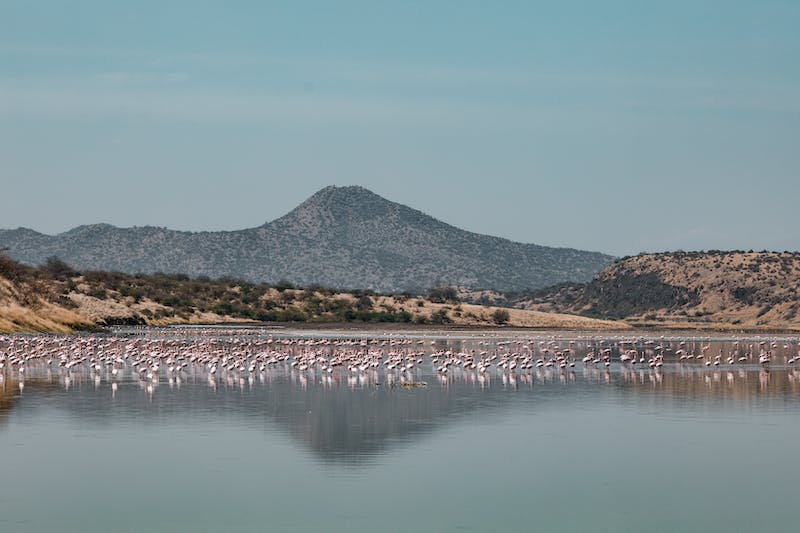
There is a particular moment at Lake Nakuru that I describe to every client before they visit — and they still come back saying no description prepared them. It is standing at the edge of the Rift Valley escarpment at the Baboon Cliff viewpoint, looking down at a lake that is not blue but pink. Not slightly pink, but a deep, living, vibrating pink caused by a million greater and lesser flamingos that cover every metre of the shoreline and stretch across the water in a shifting, breathing sheet of rose. Behind this, the Rift Valley walls rise on every side. Below, a black rhinoceros walks along the waterline. Lake Nakuru National park is one of Kenya’s most complete visual experiences, compressed into a park that is reachable from Nairobi in two hours.

Lake Nakuru Location

Lake Nakuru is located in the Rift Valley, central Kenya Nakuru County, Kenya, 160 km from Nairobi.

Lake Nakuru National Park was established in 1961, originally as a bird sanctuary to protect the extraordinary flamingo populations of the alkaline lake. It became a full national park in 1968 and was significantly expanded in 1974 to create Kenya's first rhino sanctuary — fenced on all sides to protect both black and white rhinoceros populations from poaching. Today, it holds one of East Africa's largest protected rhino populations and remains the most accessible Big Five game-viewing option from Nairobi.

The lake itself is a shallow alkaline soda lake fed by hot springs and six freshwater streams. Its water level fluctuates dramatically with rainfall — in flood years, the alkalinity drops, flamingo numbers decrease, but hippos enter the lake. In dry years, the lake shrinks and concentrates its flamingo populations in spectacular density. Both conditions offer extraordinary experiences.

Weather and climate in Lake Nakuru

Lake Nakuru national park has a subtropical highland climate. The climate is characterized by cool temperatures, moderate rainfall, and distinct dry and wet seasons.

The average temperature at Lake Nakuru ranges between 12°C and 28°C (54°F and 82°F) throughout the year. The warmest months are January to February, while the coolest months are July to August.

The wet season in Lake Nakuru national park is from March to May, with heavy rainfall and occasional thunderstorms. Another wet season occurs from October to November, which is also characterized by moderate rainfall. The dry season occurs from June to September and from December to February.

Dry season

The dry season starts in June and all through to December. The weather conditions are sunny with temperatures ranging to 25° Celcius.

January and Feb are the driest months with temperatures going up to 28° Early mornings are always chilly with temperatures of up to 9°

Wet Season

Lake Nakuru gets cloudy over the day but never rains all day. The temperatures are pleasant for game drives in the afternoon but mild in the morning. March and April are the wet seasons and May mark the end of the rainy season.

Lake Nakuru Wildlife

Flamingos at Lake Nakuru national park

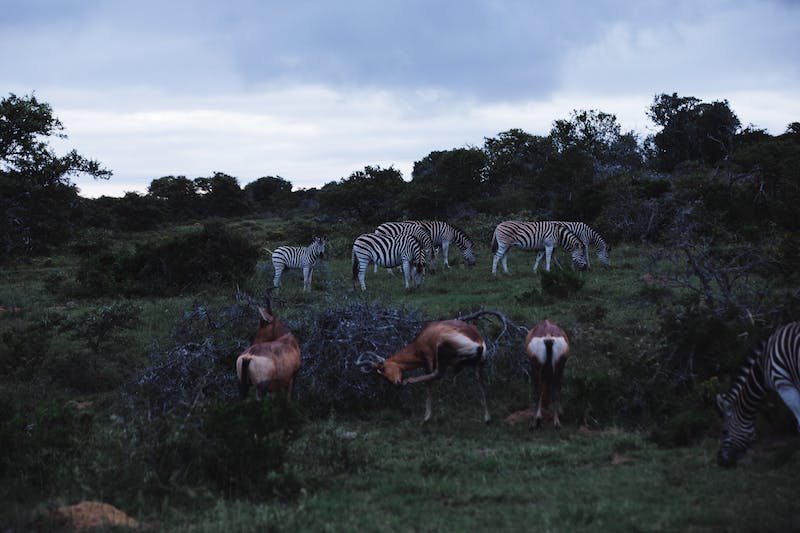
Most big safari animals are found in lake Nakuru national park except elephants which you will find at Amboseli national park in large numbers. Black and white rhinos are predominant here since there is a rhino sanctuary. . One is more likely to see; white rhinos, African buffalos, Rothschild giraffes, zebras, impalas, black rhino, olive baboons,  vervet monkeys, waterbucks, hyena, jackals, hippos, pythons, lions, leopards, cheetahs, wild dogs and colobus monkeys. 

Here is the summary of the animals you will find in Lake Nakuru National Park

Black Rhinoceros: Kenya's most important rhino sanctuary. 25+ black rhino — the best chance of a black rhino sighting in Kenya outside of Ol Pejeta.
White Rhinoceros: Southern white rhino introduced from South Africa. More commonly seen than black rhino — larger, more docile, and often in open areas.
Greater Flamingo: Up to 1 million flamingos when lake conditions are optimal. The greatest flamingo spectacle in Africa when they are present in full numbers.
Lesser Flamingo: More abundant than greater flamingos. The pink colouration of the lake surface is primarily due to the lesser flamingo. Also found at Lakes Bogoria and Elementaita.
Lion: A small resident pride patrols the park. Active hunters around the lake edge — waterbuck and impala are primary prey.
Leopard: Forest patches on the escarpment and rocky outcrops shelter a resident leopard population. Most active at dawn and dusk.
Buffalo: Large herds throughout the park, particularly in the grassland areas on the lake's northern and southern shores.
Waterbuck: Nakuru has one of Kenya's densest waterbuck populations. Highly photogenic against the lake backdrop.
Hippo: Present in the freshwater inlets and lake edge when water levels are suitable. Numbers vary with water quality.
Pelican: Great white pelicans breed at Nakuru in large colonies. Groups of 500+ pelicans landing on the lake in formation are extraordinary.
Rothschild's Giraffe: One of Kenya's most endangered giraffe subspecies was reintroduced to Nakuru. Fewer than 2,500 remain in the wild — seeing them here has real conservation significance.
Birds (450+ spp.): One of the world's great birding destinations. African fish eagle, marabou stork, pink-backed pelican, and 450+ total species recorded.

Best time to visit Lake Nakuru

Lake Nakuru National Park can be visited year-round, but flamingo numbers — the single most visually dramatic element of the park — fluctuate with water level and alkalinity. The relationship is counterintuitive: lower water levels equal more flamingos, because higher alkalinity concentrates the blue-green algae that flamingos feed on.

Peak flamingo season
(January – March and June – October)
Dry season months, when the lake shrinks slightly and alkalinity concentrates. Maximum flamingo density. Rhino sightings are also excellent — animals come to the lake margins more frequently as heat increases. Best overall combination of all wildlife.
Green season
(April – May)
Long rains raise the lake level, which dilutes alkalinity and can reduce flamingo numbers temporarily. However, green landscapes around the park create beautiful photography conditions. Rhino sightings unaffected. Low prices and few vehicles.
Year-round highlights
(All months)
Rhinoceros are present and sightable year-round — this does not change with season. The rhino sanctuary fence means they cannot leave the park, which makes Nakuru the most consistent rhino sighting in Kenya, regardless of the month.
Best rhino month
(July – August)
Peak dry season. Animals concentrate around the few remaining water sources. Rhinos are most visible in open areas near waterholes. Combine with the Mara migration for the ultimate Kenya safari circuit.
 

Attractions in Lake Nakuru

There are a lot of things to do in lake Nakuru national park upon your visit. Here are 

Birdwatching.

Lake Nakuru is the major hotspot for bird viewing. It has a dense population of over five hundred bird species.

You can nourish your eyes with beautiful flamingoes, pelicans, shining sunbird, falcons, long-tailed widowbird, grey-crowned crane, and many more along its shores. Did you know male birds are more beautiful than females? Some and many other facts are discovered at lake Nakuru.

Viewpoints.

Being located at the heart of the rift valley, there are so many viewpoints at lake Nakuru such as the Lion hill, Baboon cliff and Out of Africa  where you can stand and watch over the beautiful landscape of the rift valley.

Game drives

These drives provide wildlife viewing experiences close to the wildlife species such as the white rhinos, leopards, lions, giraffes, hippos, impalas, waterbucks among others. These game drives take place at different times of day which provides unique experiences during safaris at this destination.

Hiking

 This another activity that takes place as tourists visit the viewpoints around the national park

Bird watching

 is another interesting activity that is carried out because of the various bird species which can be seen in the different birding spots around the park.


Attractions in Lake Nakuru National Park

  • Baboon Cliff viewpoint: The single best overview of the entire lake and Rift Valley. A rocky escarpment with panoramic views — the pink flamingo lake below, the valley walls on all sides. Most dramatic in the early morning when light falls directly on the lake surface.
  • Lion Hill: The highest point inside the park. A rocky hill overlooking the southern lake shore where lions frequently rest on the rocks in the early morning sun.
  • Makalia Falls: A seasonal waterfall on the southern edge of the park, active after the rains. A pleasant stop for a bush walk break — one of the few areas inside the park where you can briefly leave the vehicle.
  • Pelican Point: The large white pelican colony breeds here. Groups of pelicans flying in formation against the flamingo-pink lake backdrop are one of the most striking wildlife photography subjects in Kenya.
  • Euphorbia Forest: A dense stand of candelabra euphorbia trees on the western escarpment — an unusual habitat that shelters leopards and a distinct bird community.

Lake Nakuru Safari

Visiting lake Nakuru is always rewarding. We have various short trips to lake Nakuru and safari packages that you will always choose and treat yourself to an unforgetful experience.

Lake Nakuru Tours
10 days safari
10 Days rustic African safari
Price from $3200 Per car of 5 Pax
7 days masai mara lake nakuru and lake naivasha safari tinerary
7 days Masai Mara, Lake Nakuru, and Naivasha Safari
Price from $1500 Per car of 5 Pax
Top Nairobi attractions for Tourists
8 days city to bush safari Kenya
Price from $2800 Per car of 5 Pax
10 days classic safari
10 Days Kenya classic safari
Price from $2000 Per car of 5 Pax
4 days safari
4 Days Lake Nakuru Masai Mara Safari
Price from $1000 Per car of 5 Pax
6 days masai mara, lake nakuru and samburu national park
6 Days Masai Mara Lake Nakuru and Samburu Safari
Price from $1380 Per car of 5 Pax
Scroll to Top

Plan your tour