Masai Mara national reserve
Masai Mara national reserve Overview
There is a moment, in the Masai Mara National Reserve, on the bank of the Mara River, when the earth itself seems to hold its breath. The wildebeest have been gathering on the northern shore for hours — hundreds of thousands of them, pressing, shuffling, and retreating in waves of collective indecision. Then one animal breaks from the edge and leaps. And then another. And within seconds the river is chaos — hooves, water, crocodiles, the roar of 1.5 million years of instinct playing out at full volume, fifteen metres from where you are sitting in your Land Cruiser with your hands shaking and your camera making sounds you cannot hear over your own heartbeat.
“Every season I bring guests to the Mara River for a crossing, I watch something happen that I cannot fully explain. People who came for the Instagram shot sit in absolute silence for five minutes after the last wildebeest crosses. It is not the spectacle that gets them — it is the realisation that this has been happening on this exact stretch of river, without an audience, for ten thousand years before we arrived to watch it.”— James Mwaura, Denki Travels Senior Guide, 14 years Masai Mara experience
The Masai Mara National Reserve is Kenya’s most celebrated wildlife destination — and with justification. Covering 1,510 square kilometres of open savannah, riverine forest, and rolling Loita Hills grassland in south-western Kenya, it is the northern extension of Tanzania’s Serengeti ecosystem, sharing the same continuous landscape and the same wildlife community across an international border that the animals themselves do not recognise. The Mara River — forming the ecosystem’s arterial boundary — sustains some of the largest Nile crocodile populations in East Africa and provides the setting for the most dramatic wildlife event on the planet: the Great Wildebeest Migration.
But the Masai Mara’s appeal extends far beyond the Migration. This is the park with Africa’s highest predator density. Multiple lion prides — including the Marsh Pride, tracked continuously since 1977 by the Kenya Wildlife Trust, and the Bila Shaka pride studied since the 1980s — maintain territories across the reserve. Resident cheetah families hunt the open short-grass plains. Leopard are reliably found at dawn and dusk in the riverine woodland. And the Big Five are not a checklist here — they are permanent neighbours, encountered not once but repeatedly, throughout every season of the year.
Beyond the main reserve, thirteen private conservancies — Olare Motorogi, Naboisho, Mara North, Lemek, Mara Triangle, and others — extend the protected ecosystem across former Maasai grazing land under community revenue-sharing agreements. These conservancies enforce strict vehicle limits at sightings, offer night game drives, walking safaris, and fly camping unavailable inside the reserve, and host Kenya’s finest safari camps. They are not an add-on to the Masai Mara experience. For discerning visitors, they are the main event.
Masai Mara at a Glance
1,510 km²Main reserve area — plus 3,000+ km² of private conservancies
1.5 MillionWildebeest crossing into the Mara each July–October
Big FiveAll five species resident year-round — highest predator density in Kenya
450+Bird species recorded — including 58 raptor species
~270 kmFrom Nairobi by road · 45 min by light aircraft
1,500 mAverage altitude — significantly cooler than Kenya’s lowland parks
Frequently asked questions Masai Mara
When is the great wildebeest migration in the Masai Mara?
The Great Wildebeest Migration arrives in the Masai Mara from Tanzania’s Serengeti between late June and early July each year, with the most dramatic Mara River crossings peaking between late July and September. The exact timing varies by 2–4 weeks depending on annual Serengeti rainfall patterns, which determine when the southern grasslands exhaust their grazing potential and the herds begin moving north.
The migration is not a single event — it is a continuous circular movement of 1.5 million wildebeest, 300,000 zebra, and 18,000 eland through the Serengeti–Mara ecosystem year-round. The Mara river crossings are the most dramatic component, but the calving season on the Serengeti short-grass plains (January–February) and the return migration south (October–November) are equally extraordinary to witness. Denki Travels monitors real-time herd movements through ground team radio networks and advises all clients on current herd position at the time of booking and again two weeks before travel.
How far is Masai Mara from Nairobi and How do I get there?
The Masai Mara is approximately 270 kilometres from Nairobi — about 5–6 hours by road via the Naivasha–Narok route, or 40–50 minutes by light aircraft from Wilson Airport to one of six ecosystem airstrips. The two options serve different itinerary types:
Light aircraft (recommended): Safarilink Aviation and AirKenya operate multiple daily scheduled departures from Wilson Airport. Fly-in preserves an entire day of game viewing and is strongly recommended for stays of three nights or fewer. Luggage limit: 15 kg per person including hand luggage, soft bags only.
Road transfer: Private 4×4 Land Cruiser via Naivasha and Narok. Fully tarmac to Narok, murram thereafter — depart Nairobi by 06:30 to avoid traffic and arrive for an afternoon game drive. Best for visitors combining the Mara with Naivasha or Nakuru on a road circuit.
Denki Travels arranges both options and advises on the most practical choice for your specific itinerary at no additional cost.
How much does a Masai Mara safari cost from Nairobi?
A Masai Mara safari cost depends on accommodation standard, duration, and whether flights are included. Here is Denki Travels’ current pricing framework:
Budget (3 nights, group joining vehicle): From USD 500–700 per person ground only. Shared vehicle, budget lodge inside reserve, all park fees included.
Mid-range (3 nights, private vehicle): USD 900–1,600 per person ground only, based on two sharing. Private Land Cruiser, certified guide, mid-range lodge, all park and conservancy fees, Nairobi transfers.
Luxury conservancy (3–5 nights): USD 2,500–6,000+ per person ground only, based on two sharing. Private conservancy camp, exclusive game drives, night drives, walking safaris, bush walks.
Hot air balloon safari: USD 450–550 per person added to any package.
Domestic flights (Wilson–Mara return): Approximately USD 280–420 per person depending on airstrip and operator.
All Denki Travels quotes are fully itemised — accommodation, guide, park fees, vehicle, and transfers are broken out clearly. Contact us for a specific quote based on your dates, group size, and preferences.
What is the best time to Visit Masai Mara?
The answer depends entirely on what you most want to experience:
For river crossings and maximum Migration drama: July–October is non-negotiable. August is peak crossing month — and the most crowded. Book 6–9 months ahead.
For big cat sightings with fewer tourists: January–February offers dry conditions, outstanding predator activity, and 30–40% fewer vehicles on the game drive circuits than August.
For UK summer holidays: July–August aligns perfectly with the Migration peak — the most popular choice for UK families.
For best value: March–June (green season) offers 20–35% lodge discounts, extraordinary green landscapes, and intense predator activity around the wildebeest calving season.
For a year-round excellent safari: The Masai Mara delivers a Big Five safari with outstanding predator density in every single month. There is no genuinely bad time to visit.
What is the difference between the main reserve and private conservancies?
This is the most important question for Masai Mara visitors to understand — and the one most under-explained by operators:
Main Reserve (Narok County government ): 1,510 km², unlimited vehicles from all operators, no vehicle limits at sightings. Large communal lodges. No night drives, no bush walks, no fly camping. Standard park entry fee applies.
Private Conservancies (community-managed): 3,000+ km² surrounding the reserve. Strict vehicle limits per sighting (typically 2–4 maximum). Night drives, bush walks, fly camping, and river boat excursions permitted. Smaller, more exclusive camps. Conservation fee paid in addition to park fee, going directly to Maasai landowners.
For a first Mara visit during Migration season (July–October), the Mara Triangle (western main reserve) is important for river crossing access. For any other season, or for a return visit, a conservancy-based camp offers a materially superior safari experience — more exclusive encounters, more activities, and a more direct conservation contribution. Denki Travels recommends and books both options honestly based on your specific priorities.
Is the Masai Mara safe for tourists?
Yes — the Masai Mara National Reserve, surrounding conservancies, and the Narok road corridor are safe and well-managed for international tourists. The FCDO (Foreign, Commonwealth & Development Office) advises normal precautions in Narok County tourist areas. The Kenya Wildlife Service maintains ranger patrols across the reserve; the private conservancies operate their own security arrangements under NGO management.
All Denki Travels vehicles carry emergency first aid kits and VHF radio communication. Our guides hold current KWS certification and first aid qualifications. Our Nairobi operations centre maintains 24/7 monitoring of all active client trips, and every client receives a direct emergency WhatsApp contact number answered around the clock. Standard safari safety applies throughout: remain in the vehicle during game drives, follow guide instructions at all times, and do not leave the lodge perimeter after dark on foot.
Can children visit Masai Mara?
Yes — the Masai Mara is one of Kenya’s most family-friendly safari destinations. Children are consistently more engaged in the Mara than in any other Kenya park because the wildlife is so frequent, the terrain so open, and the pace of the game drive so active. Lion sightings, cheetah chasing prey, and river crossings are experiences that children describe for years after returning home.
Age for standard game drives: Most lodges accept children from 3 years old
Private conservancy camps: Most set a minimum age of 7–12 years depending on the specific property’s policy
Night drives and bush walks: Usually minimum 12 years — confirm at booking
Hot air balloon safari: Minimum age typically 6 years — confirm with the balloon operator
Denki Travels confirms all age policies for every lodge and activity on family bookings at the time of reservation and will recommend the most appropriate property for the ages of children in your group.
Do I need a visa to visit Kenya for the Masai Mara?
Most nationalities — including British, American, Australian, Canadian, and most European citizens — require a Kenya eTA (Electronic Travel Authorisation) before travel. The eTA replaced the previous eVisa system in 2024. Key facts:
Application: Online only at etakenya.go.ke — no embassy visit or postal application required
Cost: USD 30 per person
Processing time: 72 hours standard (same-day processing sometimes available)
Validity: Single entry, up to 90 days (maximum 30 days per visit)
Children: Each child requires their own separate eTA application
Passport validity: Minimum 6 months beyond your return date, with at least one blank page
East African Community citizens (Tanzania, Uganda, Rwanda, Burundi, South Sudan, DRC) enter Kenya visa-free. Indian passport holders apply at evisa.go.ke. Denki Travels sends all clients a step-by-step eTA/eVisa application guide at booking confirmation.
What should I pack for a Masai Mara safari?
Our guides’ essential Masai Mara packing list — based on 14 years of watching guests arrive under-prepared:
Warm layer: Quality fleece or lightweight down jacket — non-negotiable for July–August dawn drives at 12°C in an open vehicle
Neutral clothing: Khaki, olive, beige, sand, or grey. No white (dust-magnet), no bright colours (disturbs wildlife)
Sun protection: Factor 50+ sunscreen (equatorial UV is intense), wide-brimmed hat, UV sunglasses
Binoculars: Minimum 8×42 magnification — the single most important equipment investment after your camera
Camera: Minimum 300mm zoom for game drives; 400–600mm for river crossings; extra memory cards and a power bank for vehicle charging
Health: Anti-malarial tablets as prescribed (consult GP 6–8 weeks before travel), DEET repellent 50%+, rehydration sachets
Soft luggage: If flying on domestic light aircraft, 15 kg maximum total per person in a soft holdall — no hard suitcases
Documents: eTA approval (digital or printed), travel insurance emergency number (on a separate piece of paper and in your phone)
Denki Travels sends every client a detailed season-specific packing guide 14 days before departure.
Is Malaria a risk in Masai Mara?
Yes — the Masai Mara is a moderate malaria risk area. Anti-malarial medication is strongly recommended by the NHS, FCDO, and CDC for all visitors. Nairobi itself is considered very low risk, but the Mara’s lower-altitude areas and riverine zones are higher risk, particularly during the rainy seasons.
Medication: Consult your GP or a travel clinic at least 6–8 weeks before departure. Malarone (atovaquone-proguanil) is the most commonly prescribed option for Kenya — well-tolerated, daily dose, minimal side effects for most travellers
Repellent: DEET-based insect repellent at 50% concentration — apply at dawn and dusk when mosquito activity is highest
Clothing: Long sleeves and trousers at dawn and dusk — neutral colours additionally serve the dual purpose of not disturbing wildlife
Accommodation: All Denki Travels-recommended lodges provide mosquito nets and/or air-conditioned rooms as standard
We additionally recommend AMREF Flying Doctors East Africa annual membership (approximately USD 50 per person) as supplementary medical evacuation cover. In the event of a serious medical emergency in the Mara, AMREF is the primary air evacuation service used by Kenya’s national parks.
Can I see all the big five in Masai Mara?
Four of the Big Five are encountered with very high probability on a full-day Masai Mara game drive:
Lion: Near-certain on any full day — highest density in Kenya
Leopard: Good probability at dawn or dusk in riverine woodland — excellent sighting rate with experienced guides
Elephant: Certain — large resident herds throughout the ecosystem
Buffalo: Certain — large herds daily throughout the reserve
Black Rhinoceros: Rare — a small population exists in the Mara Triangle but sightings are uncommon. Honest expectation: 2–3 sightings per season for any single guide working the Triangle.
If a guaranteed rhinoceros encounter is a priority, we strongly recommend combining the Masai Mara with Lake Nakuru National Park — Kenya’s premier rhino sanctuary with both black and white rhino in a fully fenced reserve. Denki Travels designs combined Mara–Nakuru circuits as a seamless single booking.
How long should I spend in Masai Mara?
The minimum recommended stay is three nights — giving you two full game-drive days, enough to position for river crossings during Migration season, complete a conservancy circuit, and have time to genuinely settle into the rhythm of the bush. A 3-night stay that includes a balloon safari and a night drive covers the key Mara experiences without feeling rushed.
Four to five nights is our recommendation for visitors who want everything: multiple river crossing positions, a bush walk, a Maasai village visit, fly camping, and the unhurried pace that produces the most extraordinary encounters. Many experienced safari travellers who return to Kenya come back to the Mara specifically, extending their stay rather than adding another destination.
For a first Kenya safari combining multiple parks, 3 nights Masai Mara + 2 nights Amboseli is our most popular circuit for visitors who want to experience both Kenya’s greatest predator ecosystem and its most iconic elephant and Kilimanjaro scenery.
What currency do I need in the Masai Mara?
Most Masai Mara lodges accept Visa and Mastercard for incidental purchases. The following practical guidance applies for a Mara trip:
USD cash: The most useful currency in Mara — bring small denominations (USD 10s and 20s) for guide tips (standard: USD 10–20 per person per day for your guide, USD 5–10 per day for camp staff)
Kenyan Shillings: Withdraw at JKIA or Nairobi ATMs before the bush — there are no ATMs inside the reserve or conservancies. Bring sufficient shillings for any personal purchases at Narok town en route
Travel cards: Wise, Revolut, or Starling (UK) fee-free cards are excellent for JKIA ATM withdrawals. Inform your home bank before travel to prevent overseas transaction blocks
Should I visit the Masai Mara or the Serengeti?
Both parks form part of the same continuous ecosystem — the same wildebeest herd, the same predator species, the same Mara River. The choice is primarily about logistics and what specific experience you are optimising for:
Choose the Masai Mara if: You are based in Nairobi (or flying into Kenya), you want the private conservancy experience (night drives, exclusivity), you have 3–7 days, or you want to combine with other Kenya parks
Choose the Serengeti if: You specifically want the calving season spectacle on the southern plains (January–February), you have more than 7 days, or you are combining with a Tanzania circuit (Ngorongoro, Tarangire)
Do both if: You have 10+ days and want the most complete Migration experience — cross at Isebania border by road or fly Mara to Kilimanjaro airport
Denki Travels manages the Kenya component of combined itineraries and works with trusted Tanzania ground partners for cross-border circuits.
What travel insurance do I need for a Masai Mara safari?
Travel insurance for a Kenya safari must include the following specific cover — not all standard travel policies include all of these:
Emergency medical evacuation: Minimum USD 50,000 cover — a medical airlift from the Masai Mara to Nairobi can cost USD 15,000–25,000 without insurance. This is the single most important cover to verify
Safari activities: Confirm that standard game driving is covered. It is not typically classed as an adventure activity, but verify with your insurer. Bush walking and balloon safaris may require specific cover
Trip cancellation and curtailment: Essential for the significant cost of a Kenya safari package
Personal belongings and camera equipment: Specify high-value camera equipment separately on your policy if total value exceeds standard limits
Your EHIC/GHIC card is not valid in Kenya — do not rely on it
We additionally recommend AMREF Flying Doctors East Africa membership (approx. USD 50/year per person) as a supplementary medical evacuation layer, separate from your travel insurance. Denki Travels includes specific insurance guidance in every client’s pre-departure information pack.
Masai Mara national reserve Location
The Masai Mara National Reserve is located in the south-western corner of Kenya, occupying the Narok County portion of the greater Mara–Serengeti ecosystem. Its southern boundary follows the Mara River — the boundary with Tanzania's Serengeti National Park. To the north and east, the reserve is bordered by Maasai community conservancies. To the west, the Oloololo Escarpment marks the edge of the Mara Triangle, the reserve's most productive game-viewing section.
Narok town — the last major fuel, banking, and supply point — is 74 kilometres north-east of the Sekenani Gate on a tarmac road. Nairobi is 270 kilometres away by road through the Rift Valley and Narok, or 45 minutes by light aircraft from Wilson Airport to one of six airstrips serving the ecosystem.
The Reserve and Its Gates
Sekenani Gate
Main gate · Eastern reserve access · 74 km from Narok
- Primary road access point from Nairobi via Narok
- Serves Keekorok area and central reserve lodges
- KWS fee payment and vehicle registration point
- Most visited gate — busy July to October
Talek Gate
Eastern access · Close to river crossings
- Access to Talek River area and eastern conservancies
- Closest gate to many private conservancy camps
- Also serves as access to Mara North Conservancy
- Less congested than Sekenani during peak season
Musiara Gate
Western · Mara Triangle · River crossing access
- Entry to the Mara Triangle — managed by the Mara Conservancy (NGO)
- Home to the most famous river crossing points (Serena, Lookout Hill)
- Stricter vehicle management than the main reserve
- Access to Mara Serena Lodge and neighbouring camps
The Private Conservancies — Explained
The thirteen private conservancies surrounding the Masai Mara are collectively as important as the reserve itself. Operating under partnership agreements with Maasai landowners — who receive a per-acre annual payment funded by lodge bed-night fees — the conservancies have converted over 3,000 square kilometres of former cattle land into one of the most significant wildlife habitats in Africa. They enforce strict vehicle limits per sighting, allow activities unavailable in the main reserve, and host the ecosystem's most exclusive and ecologically responsible safari camps.
Olare Motorogi Conservancy
North of the reserve · 33,000 acres · Vehicle limit: 4 per sighting
- Superb predator territory — cheetah, lion, and leopard all resident
- Night drives and walking safaris permitted
- Homes: Kicheche Mara, Mahali Mzuri, Olare Mara Kempinski
- Maximum 4 vehicles per sighting strictly enforced
Naboisho Conservancy
50,000 acres · Highest lion density per km² in the Mara
- Reported highest lion density per square kilometre in the entire ecosystem
- Fewer camps than Olare Motorogi — more intimate
- Homes: Encounter Mara, Olarro Lodge, Sala's Camp
- Night drives, walking safaris, and fly camping available
Mara North Conservancy
74,000 acres · Vehicle limits · Wild dog territory
- One of the largest conservancies — excellent walking safari circuits
- African wild dog packs resident — most reliable wild dog territory in the Mara
- Homes: Elephant Pepper Camp, Offbeat Mara, Sanctuary Olonana
- Expert foot safaris guided by former Maasai warriors
Denki Travels advice on reserve vs conservancy: For first-time Mara visitors during Migration season (July–October), the main reserve — particularly the Mara Triangle — is non-negotiable for river crossings. For a return visit, or for visitors prioritising exclusivity and night drives, a conservancy-based camp with reserve access is the superior choice. We recommend discussing this at enquiry — we have experienced the difference at first hand and will advise honestly.
Weather and climate in Masai Mara national reserve
The Masai Mara sits at approximately 1,500–2,000 metres above sea level — high enough to moderate the equatorial heat very significantly compared to Kenya's lowland parks. Daytime temperatures year-round range from a comfortable 18°C to 30°C. Mornings — particularly July and August — can be genuinely cold for an open-roof game drive: as low as 12°C at 06:00. A quality fleece or lightweight down jacket is the single most important item a guide will tell you that you have forgotten to pack.
Two rainy seasons affect the Mara: the long rains from March to May (typically April being the wettest month) and the short rains from October to November. Neither season reliably prevents morning game drives — rain in the Mara usually falls in the afternoons and evenings rather than at dawn, and a wet-season game drive on a green Mara, with dramatic clouds and intense light, is a photography experience in its own right. The critical variable is road surface — some murram tracks become impassable in the heaviest rains and require lodge vehicles with local knowledge to navigate safely.
| Month | Avg. Day Temp | Avg. Dawn Temp | Rainfall | Wildlife & Conditions | Season Rating |
|---|---|---|---|---|---|
| January | 26–30°C | 14–16°C | Very low | Dry and clear. Superb predator activity — calving season beginning in the Serengeti drives predator prey action in the Mara | Excellent |
| February | 26–30°C | 14–16°C | Very low | Outstanding big cat sightings. Low grass for maximum visibility. Excellent for photography. Fewer tourists than peak season. | Excellent |
| March | 22–26°C | 14–16°C | Moderate | Long rains beginning. Landscape greening rapidly. Lodge discounts available. Morning drives still excellent. | Good Value |
| April | 20–24°C | 13–15°C | Heavy | Wettest month. Lush green scenery. Significant lodge discounts 25–35%. Excellent birdwatching. Newborn animals throughout. | Best Value |
| May | 20–24°C | 13–15°C | Moderate | Rains easing. Beautiful green landscape. Intense predator-prey action on young calves. Very few visitors. | Good Value |
| June | 22–26°C | 13–15°C | Very low | Dry season returns. Wildebeest beginning to arrive from Serengeti. Peak season approaching — book lodges now if not done. | Very Good |
| July | 20–25°C | 12–14°C | Very low | Migration at full density. River crossings building. Coldest mornings — fleece essential. Pack with both temperatures in mind. | Peak Season |
| August | 22–26°C | 13–15°C | Very low | Maximum river crossing frequency — the most dramatic and consistently spectacular month. High visitor numbers. | Peak Season |
| September | 24–28°C | 14–16°C | Very low | Migration still active. Wildebeest calving beginning again in Serengeti. Outstanding predator activity throughout. | Peak Season |
| October | 22–26°C | 14–16°C | Moderate | Wildebeest departing south. Short rains beginning. Landscape greens rapidly. Good general wildlife. | Good |
| November | 20–24°C | 13–15°C | Moderate | Short rains — brief afternoon showers. Excellent for photography. Green season beauty. Good predator activity. | Good |
| December | 22–26°C | 14–16°C | Low–Mod | Rains easing. Good wildlife throughout. Christmas high season — book lodges minimum 4 months ahead for this month. | Good |
What to Wear — Packing for the Masai Mara
Guide-Approved Packing List
- Clothing: Neutral colours only — khaki, olive, beige, sand, grey. No white (shows Mara dust immediately), no bright colours (disturbs wildlife at close range)
- Layers are essential: Lightweight long-sleeve shirts × 3, lightweight trousers × 2, quality fleece or lightweight down jacket for dawn drives in July–August
- Rain layer: A packable waterproof shell — not for warmth but for the occasional afternoon shower on a full-day drive
- Footwear: Comfortable walking shoes for lodge grounds — no open-toe sandals in wildlife areas. Lightweight boots for any conservancy walking
- Sun protection: Factor 50+ sunscreen (non-negotiable — equatorial UV is intense at 1,800 m), wide-brimmed hat, UV-rated sunglasses
- Optics: Binoculars minimum 8×42 magnification. Camera with minimum 300mm zoom lens for game drives, 400–600mm for river crossings
- Health: Anti-malarial tablets as prescribed, DEET insect repellent 50% concentration, rehydration sachets
- Equipment: Power bank for vehicle charging, lens cloth (Mara dust gets everywhere), Ziploc bags for electronics protection
From our guides: "July and August guests always ask why nobody told them about the cold. At 06:00 in July at 1,800 metres, in an open Land Cruiser driving at 50 km/h, 12°C feels significantly colder than it reads. The guide team at Denki Travels sends every client a season-specific packing guide two weeks before departure. Do not leave the fleece at home because it is Kenya." — John Mugo, Denki Travels Guide, 9 years Mara experience
Masai Mara national reserve Wildlife
The Masai Mara sustains the highest predator density of any ecosystem in Africa. This is not promotional language — it is a documented ecological reality produced by the combination of year-round resident prey abundance, the seasonal surplus of 1.5 million migrating wildebeest, and 50+ years of research and protection that have allowed predator populations to establish at concentrations found nowhere else in the world. The Mara Predator Project, operating since 2006 in partnership with multiple international research institutions, currently tracks and monitors over 50 individually identified lions, as well as cheetah and hyena populations across the ecosystem.
Lion (Panthera leo)Resident
The Masai Mara has the highest lion density in Kenya — estimated 23–27 lions per 100 km². Multiple named prides maintain mapped territories across the ecosystem. The Marsh Pride — studied continuously since 1977 and the subject of BBC's famous Big Cat Diary series — is the most documented lion family group in the world.
- Most active: dawn (06:00–09:00) when finishing nocturnal hunts
- Cubs present in most prides for most of the year
- Best in the Mara Triangle (west) and Talek River area (east)
- Night drives in conservancies reveal nocturnal hunting behaviour
Leopard (Panthera pardus)Resident
Riverine forest along the Mara and Talek rivers sustains a significant leopard population. Individual animals are known to guides by territory and physical markings. Dawn and dusk are the productive windows — midday leopards are deeply committed to their favourite fig trees and rarely visible from the ground.
- Most likely: Talek River woodland, Olare Motorogi riverine areas
- Best time: 06:00–09:00 and 16:30–18:30
- Night drives double sighting probability — animals actively hunting
- Conservancy guides track individual leopard territories precisely
African Elephant (Loxodonta africana)Resident
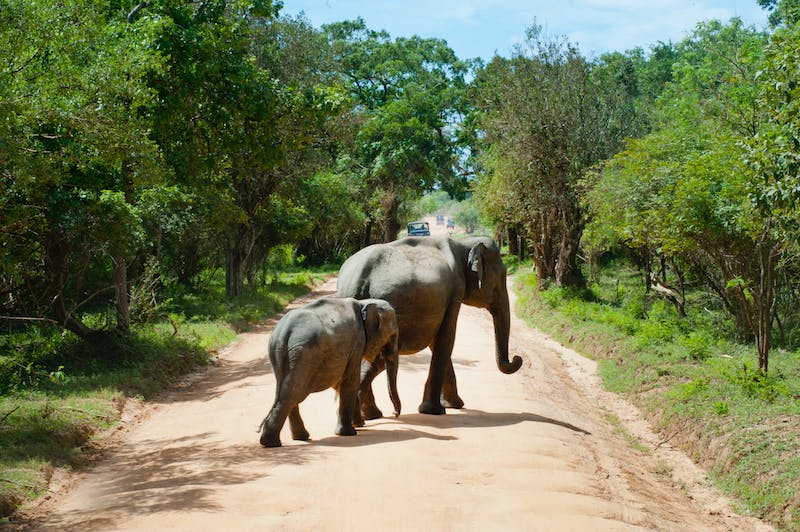
Large family herds throughout the ecosystem — particularly in the Mara Triangle and along the major rivers. Mara elephants are fully habituated to vehicles and frequently pass within metres, providing photography encounters of extraordinary quality. Bulls in musth require careful distance management.
- Resident year-round — no seasonal variation
- River margin areas most productive during dry season
- Family groups with calves most commonly encountered in the conservancies
Black Rhinoceros (Rare)
A small but critically important rhinoceros population exists in the Mara Triangle, managed under strict protection by the Mara Conservancy NGO. Sightings are genuinely uncommon — typically 2–3 per season for any single guide working the Mara Triangle. If seeing rhino is a priority, combine the Mara with Lake Nakuru National Park.
- Most likely: Mara Triangle western section, early morning
- Not a reliable sighting — adjust expectations accordingly
- Lake Nakuru: Kenya's best rhino destination (1.5 hrs from Nairobi)
Cape Buffalo (Syncerus caffer)Resident
Enormous herds — some exceeding 1,000 animals — move across the reserve's open grasslands year-round. Old dagga boys near permanent water are a daily encounter. Buffalo are statistically the most dangerous of the Big Five in terms of human encounters — approach with appropriate caution from the vehicle.
- Large herds most visible in open plains areas
- Individual bulls and small groups near waterholes daily
- Very active at dawn — frequently encountered on early drives
Cheetah (Acinonyx jubatus)Resident
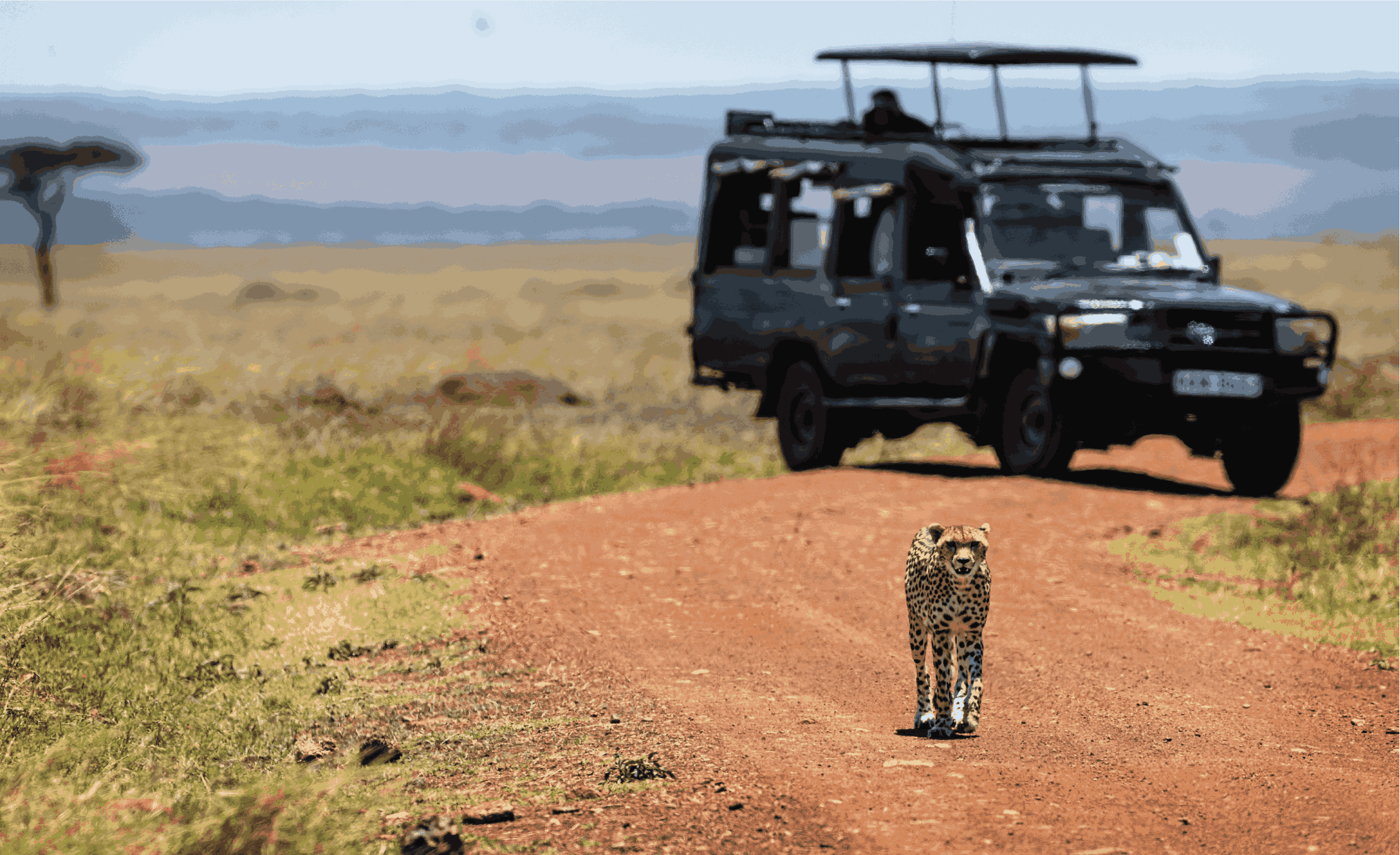
The Masai Mara has one of Kenya's most reliable cheetah populations — including named individuals from the lineage of the famous Malaika, studied by cheetah researchers for over three decades. The open short-grass plains of the Mara Triangle and Olare Motorogi Conservancy are Kenya's finest cheetah habitat, providing unobstructed hunt observation from the vehicle.
- Best in Mara Triangle and Olare Motorogi open plains
- Coalition males and single females both resident
- Hunts most likely 07:00–10:00 and 16:00–18:00
- Cubs visible most years in known coalition territories
Wildebeest (Connochaetes taurinus)Seasonal Jul–Oct
1.5 million blue wildebeest form the bulk of the Great Migration — the largest overland animal movement on Earth. They arrive in the Mara from late June and remain through October, crossing the Mara River at multiple points in events that are simultaneously chaotic, brutal, and utterly extraordinary to witness.
- Main crossing points: Serena crossing (Mara Triangle), Lookout Hill, Sand River
- Peak river crossing frequency: late July through September
- Resident Mara wildebeest remain year-round even outside Migration season
- Denki Travels monitors real-time crossing activity via ground team radio
Nile Crocodile (Resident)
The Mara River hosts some of the largest Nile crocodile individuals in East Africa — adults exceeding 5 metres in length are documented. They are most dramatically active during Migration season, positioned at known crossing points awaiting the wildebeest herds with the patience of animals whose species has been doing exactly this for 200 million years.
- Most visible: Migration season at river crossing points
- Also regularly seen basking on Mara River banks year-round
- Year-round activity at Musiara Marsh hippo pools
Hippopotamus (Resident)
Large hippo pods occupy the Mara River and Musiara Marsh year-round. Most vocal at dusk as they prepare to leave the water for nocturnal grazing. Dawn drives along the Mara River reveal hippos returning to the water — a highly productive wildlife and photography window.
- Year-round resident — no seasonal variation
- Musiara Marsh: large pods observable from close range
- Dusk is the most active and vocal time
African Wild Dog (Occasional)
Wild dog packs move through the Mara ecosystem from the Serengeti, occasionally denning in the Mara North Conservancy area. A confirmed wild dog sighting is the most celebrated radio call of any Mara day — experienced guides will stop everything and reposition immediately on receiving a confirmed report. Not a reliable sighting but transformatively exciting when it occurs.
- Most likely: Mara North Conservancy (most reliable area)
- Pack movements are tracked by conservancy radios when dogs are present
Plains Zebra (Resident)
Enormous resident herds throughout the reserve, supplemented by migrating zebra that travel alongside the wildebeest from June to October. Zebra cross the Mara River alongside wildebeest during the Migration and are equally targeted by crocodiles — dramatic secondary footage to any river crossing.
- Year-round resident populations throughout the reserve
- Peak numbers July–October alongside the wildebeest herds
Birds (450+ Species)Resident
The Mara records 450+ species including 58 raptors. Key residents: superb starling, lilac-breasted roller, secretary bird, martial eagle, and the Egyptian vulture. Migration season brings large numbers of Palearctic migrants. The Mara River and Musiara Marsh support exceptional waterbird communities including African fish eagle, goliath heron, and giant kingfisher.
- Request a specialist birding guide through Denki Travels for dedicated species-list sessions
- Best dedicated birding: dawn drives in the riverine woodland sections
Best time to visit Masai Mara national reserve
The Masai Mara is an outstanding safari destination in every month of the year — the Big Five are resident, the predators are active, and the landscape is spectacular regardless of whether the Migration is present. The question is not when to visit so much as what you want from your visit. The answer to that question determines the optimal season.
July – October (Peak Migration Season)
- 1.5 million wildebeest in the reserve with their full predator pressure
- Mara River crossings from mid-July through September
- Highest predator density and activity of the year
- Dry, clear conditions — maximum game viewing visibility
- Aligns with UK and European summer school holidays
- August is the single most dramatic month — and the most crowded
- Book lodges 6–9 months ahead for July–August
January – February (Excellent — Dry Season)
- Second dry season — very low vegetation, outstanding visibility
- Outstanding big cat sightings — some of the year's best predator action
- Wildebeest calving season underway in Serengeti — surplus of young prey drives predator activity
- Significantly fewer tourists than peak season
- Aligns with UK February half-term holiday
- Lodge prices 15–25% lower than peak July–August
November – December (Good — Shoulder Season)
- Short rains — usually brief afternoon showers only
- Landscape recovers to vivid green within days of first rain
- Good predator activity throughout
- December Christmas/New Year high season — book early
- Photography: dramatic clouds and intense afternoon light
- Wildebeest departing south — Serengeti calving begins
March – June (Best Value — Green Season)
- Long rains — lodge discounts 20–35% on peak rates
- Dramatic lush green landscapes — exceptional photography light
- Newborn animals throughout — intense predator-on-calf activity
- Virtually no other vehicles in the park — most intimate experience
- Wildebeest herds building at southern reserve edges in June
- Morning drives remain productive regardless of afternoon rain
UK School Holiday Alignment with Masai Mara Seasons
| UK Holiday | Approximate Dates | Mara Season | Our Recommendation |
|---|---|---|---|
| Summer Holidays | Late July – Early Sept | Peak Migration — river crossings at maximum | Best of the Year — Book 8–9 months ahead |
| October Half-Term | Late October | Tail of Migration, rains beginning, good wildlife | Very Good — Good value vs August |
| February Half-Term | Mid–Late February | Excellent dry season, big cats outstanding | Excellent — Most overlooked by UK visitors |
| Easter Holidays | Late March – Mid April | Green season — discounts 25–35% | Best Value — Lush landscapes, fewer crowds |
| Christmas / New Year | Late Dec – Early Jan | Rains easing, good wildlife, high season pricing | Good — Book December 6+ months ahead |
Attractions in Masai Mara national reserve
The Masai Mara's activity menu is broader than most visitors expect — and the difference between a standard Mara visit and a transformative one usually comes down to which of these experiences your operator has taken the time to actually pre-arrange, rather than leaving to chance on arrival. Denki Travels co-ordinates all activities below as part of every Mara package — nothing is left as a "might be available on request."
Dawn, Day and Dusk Game Drives
Year-round · Private vehicle · The foundation of every great Mara safari
The game drive is not a passive activity. In skilled hands, it is an exercise in reading a landscape that is communicating continuously through tracks, sounds, behaviour, and the radio reports of other guides. Your Denki Travels guide does not drive to where wildlife is — they drive to where wildlife is about to be, based on everything the bush has told them since before you woke up.
- Dawn drives (06:00 departure): Predators finishing nocturnal hunts — the highest-intensity wildlife window of the day
- Full-day drives with bush breakfast: Cover the full reserve circuit including the Mara Triangle, river areas, and open plains in a single day
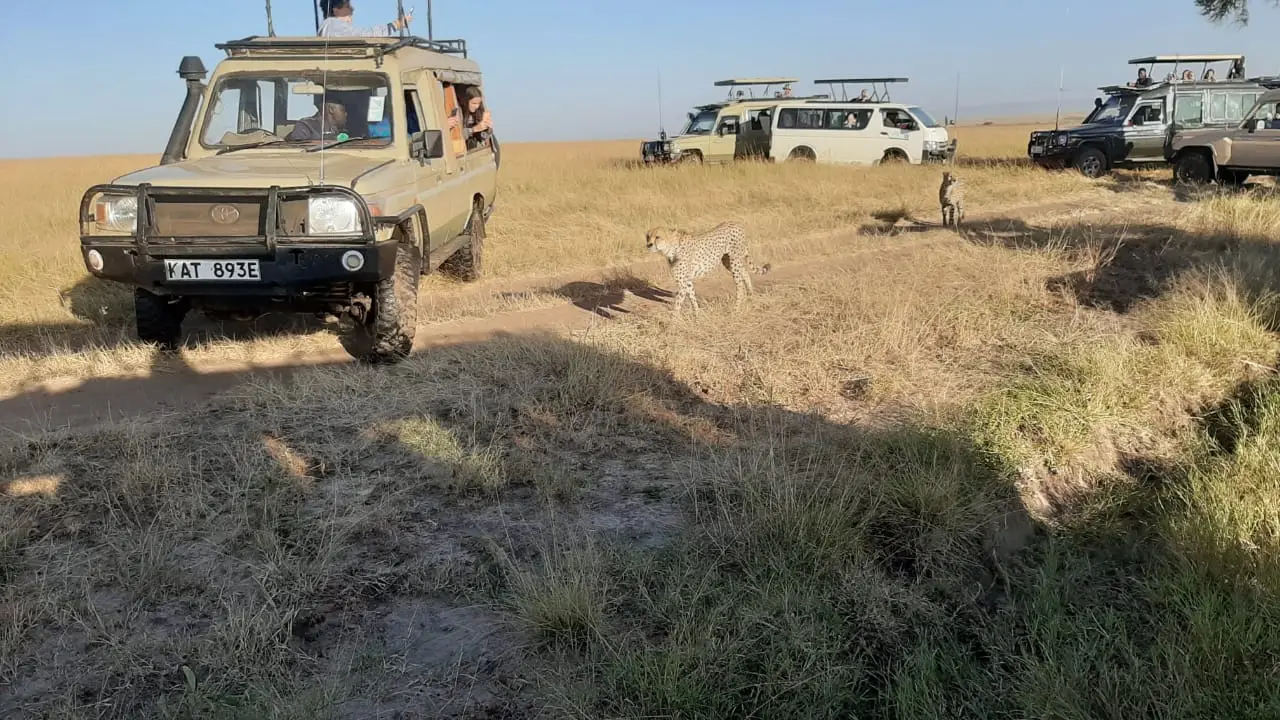
- Conservancy drives: 2–4 vehicles maximum per sighting — intimate, unhurried encounters impossible in the main reserve
- Radio network: All Denki Travels guides use the inter-guide radio network to share real-time sighting positions across the ecosystem
- Avoid midday: 10:30–15:30 is the least productive window — most animals resting in shade. Plan camp time here.
Wildebeest River Crossings
July – October only · Mara River · The Greatest Show on Earth
When 1.5 million wildebeest reach the Mara River, their survival instinct to access fresh pasture on the opposite bank eventually overcomes their legitimate fear of what lives in the water. What follows cannot be described adequately in a travel guide. This is an experience that exists outside the vocabulary of wildlife tourism.
- Main crossing points: Serena crossing (Mara Triangle), Lookout Hill crossing, Sand River crossing
- Positioning: Arrive at the crossing point by 07:00 — herds build on the bank over 1–4 hours before committing
- Multiple crossings: Up to 4 separate crossings can occur at different points on the same morning in peak August
- Duration: Some crossings last 8 minutes; some last 6 hours. Wait times are part of the experience.
- Photography: 400–600mm telephoto lens. The animals are 15–30 metres from the vehicle at an established crossing.
- Denki Travels monitors: Real-time herd position from ground teams — we position the vehicle before the crossing begins
Hot Air Balloon Safari
Year-round · Dawn launch · Champagne breakfast · Must-do experience
Drifting at treetop height over the Mara at dawn — watching elephant herds move across the plains below, the Mara River gold in the first light, the Serengeti horizon forty kilometres to the south — is one of Kenya's most purely serene wildlife experiences. It is completely different from the game drive: quieter, slower, and revealing the ecosystem's scale in a way that a vehicle circuit never achieves.
- Launch at first light from multiple Mara locations — Mara Serena, Keekorok, and conservancy sites
- 1–1.5 hours of flight following the wind at the pilot's navigation
- Champagne breakfast served on landing — anywhere the balloon sets down in the bush
- Migration season flights over the wildebeest herds: uniquely extraordinary viewpoint
- Prices: approximately USD 450–550 per person from most operators
- Book well in advance — strict passenger limits per flight, sold out throughout peak season
Bush Walks and Fly Camping
Conservancy only · Armed ranger escort · Overnight under the stars
Walking in the Masai Mara ecosystem — in a landscape with lion, leopard, and buffalo — is a categorically different experience from a vehicle game drive. On foot at dawn, the bush communicates through sounds, smells, and ground signs that no vehicle can access. Fly camping — sleeping on a mattress under a fly sheet in the open conservancy with the sounds of the Mara night unfiltered by tent walls — is one of the most extraordinary experiences in African travel.
- Bush walks: Armed KWS ranger leads throughout — full safety briefing before departure
- Focus on tracking, plant ecology, and smaller wildlife overlooked from vehicles
- Duration: 2–3 hours, departing 06:30 for the best conditions
- Fly camping: Available exclusively in private conservancies — Kicheche, Porini, Olare Mara Kempinski
- Sleep on a camp cot or mattress under the stars with a small dedicated camp crew and armed guard
- Pre-arrange at time of booking through Denki Travels — availability is limited and specific to certain camps
Maasai Village Cultural Visit
Year-round · Community conservation revenue · Authentic cultural engagement
The Maasai people have coexisted with the Mara's wildlife for centuries — managing the same pastoral landscape that now sustains one of Africa's greatest wildlife areas without decimating it. Their continued coexistence is not coincidental; it reflects a fundamental compatibility between their traditional land use and wildlife that modern conservation models are actively trying to formalise and fund. A village visit is therefore both a cultural experience and a direct contribution to the conservation model.
- Traditional manyatta (homestead) visit — guided by a community member, not a tourist liaison officer
- Adumu (jumping dance) and traditional song performance — genuine cultural practice, not a rehearsed show
- Interior of a Maasai enkiama (home) shown and explained by the woman of the household
- Beadwork and craft marketplace — all prices negotiated directly, all revenue to the artisan
- Conservancy fees paid by your lodge go directly to Maasai landowners — the village visit reinforces this connection
- Arrange through your lodge or through Denki Travels at booking — 1.5–2.5 hours typical
Wildlife Photography Safari
Year-round · Private vehicle · World-class encounters
The Masai Mara consistently ranks in the world's top three wildlife photography destinations. The combination of open terrain, habituated predators at extended viewing range, the extraordinary quality of the morning and evening light at this latitude, and the ability to position a private vehicle for composition rather than crowd management produces conditions that professional photographers travel specifically to access.
- Private vehicle means you control your position for light angle and composition — not for group comfort
- Specialist photography guides available on advance request through Denki Travels
- Low-sided vehicles and bean bag lens rests available at select conservancy camps
- Migration river crossings: 400–600mm telephoto is the standard equipment recommendation
- Golden hour windows: 06:00–08:30 and 16:30–18:30 — plan drive circuits around these times
- Discuss photography requirements, equipment, and specific target species at time of booking
Night Game Drives
Conservancy only · Spotlight vehicle · Nocturnal species
Night game drives are prohibited inside the Masai Mara National Reserve — this is one of the most significant and underappreciated advantages of private conservancy accommodation. After dark, the Mara ecosystem transforms. The animals that spent the day resting become active. Leopard hunting. Spotted hyena on the waterhole. Serval moving through the long grass in the spotlight beam. The nocturnal Mara is a different experience entirely from the daylight reserve.
- Available exclusively in private conservancies — not permitted in the main reserve
- Open 4×4 with a powerful spotlight operated by the guide
- Species seen: spotted and striped hyena, serval, African wildcat, aardvark, spring hare, genet
- Leopard sighting probability increases significantly after dark — animals actively hunting and moving
- Duration: approximately 2–2.5 hours from dusk
- Available from all Denki Travels conservancy-based camps — confirm specific availability at booking
Mara River Sundowner Cruise
Select camps only · Hippo pods · Crocodile encounters at close range
A small number of Mara River camps operate flat-bottomed boat excursions along the river at dusk — an entirely different perspective on the ecosystem and on the hippos and crocodiles that define the river. Combined with a sundowner drink as the Loita Hills catch the last light, this is one of the Mara's most exclusive and rarely marketed experiences.
- Available from select riverine camps — Governors' Camp, Rekero, and others
- Hippo pods at extremely close range — far more intimate than vehicle observation
- Nile crocodile individuals at rest on the banks as the light fades
- African fish eagle calling at dusk from the riverside trees
- Not widely offered — request specifically at booking through Denki Travels
- Combine with a night drive for the most complete evening experience
| Activity | Best Season | Duration | Where Available | Pre-Arrange | Rating |
|---|---|---|---|---|---|
| Dawn Game Drive | Year-round — peak Jul–Oct | 3–4 hours | Reserve + conservancy | Included in package | Must Do |
| River Crossing Positioning | July – October only | 2–6+ hours waiting | Mara Triangle / Talek | Included in game drive | Must Do |
| Hot Air Balloon | Year-round | 3.5 hrs total | Multiple launch sites | Book in advance | Must Do |
| Night Game Drive | Year-round | ~2 hours | Conservancy only | Book conservancy camp | Highly Rec. |
| Bush Walk | Year-round · dry season best | 2–3 hours | Conservancy only | At booking | Highly Rec. |
| Maasai Village Visit | Year-round | 1.5–2.5 hours | Adjacent to reserve | Via lodge | Highly Rec. |
| Fly Camping | Dry season best | Overnight | Conservancy only | At booking | Unique |
| River Sundowner Cruise | Year-round | 1.5–2 hours | Select riverine camps | Request specifically | Rare Experience |
| Photography Safari | Jan–Feb, Jun–Oct best | Full day | Reserve + conservancy | Request specialist guide | Specialist |
Masai Mara national reserve Safari
Our guides have worked the Masai Mara ecosystem for a combined four decades. They know the current Marsh Pride territory, which river crossing point is most active this week, which conservancy circuits are delivering the most intimate big cat encounters right now, and which lodges are operating at their best this season. When you book a Mara safari with Denki Travels, you are not booking an itinerary — you are accessing that field knowledge, applied to your specific dates, group, and priorities. Tell us when you want to travel. Your personalised itinerary and fully itemised quote will be in your inbox within 24 hours.